


I often get asked “What’s the deal with the cranes?” Here’s the deal.
First of all, I just love them on an instinctive, animal level. Big machines, man.
But they’re not just any machine. We live a fabulously, unnaturally wonderful lifestyle, and the labor which facilitates it happens so excellently that it’s almost invisible to us. And when you look to the skyline, there is one unmistakable silhouette that showcases the labor itself - the crane.
You Are Surrounded By Invisible Labor
Look at the objects in your immediate vicinity right now. Are they safe and do they work?
Look at your water bottle. Is it fragile or leaky or porous? Probably not. Someone in quality control made sure of that. Look at your table. Is it splintery? Nope, hardly any tables around here are splintery - some enormous machine filed away all the splinters. Look at your window. Are you concerned with it caving in? Probably not. I go through >99% of my days blissfully unconcerned with the strength of my windowpanes, because I automatically trust that my windows are tested by a panel of safety experts and graded to withstand the common wind conditions of my climate. Who are these safety experts and how do they work? I have no idea. But I live in a developed country, so I just live with the cached knowledge that someone, somewhere, made sure the products around me are safe.
Look at your soap, your chapstick, your toilet paper. They work, they’re cheap, they hardly ever run out. Have you ever tried to make homemade soap, chapstick, or toilet paper? Even the basics require a hell of a lot more manpower than they appear, and on top of the production labor, you’d have to rely on a societal knowledgebank of what ingredients are safe for human skin. You’ve probably only experienced a few brushes with contaminated products throughout your life. Many strangers work full-time to ensure that.
Look at the cheese in your refrigerator. If it’s within its expiration date and doesn’t have visible mold, you’ll probably eat it without a second thought. You’re right to do so - it will have a very low chance of containing listeria or salmonella or some other pathogen. Thousands of experts made sure of that. Not just the cheese inspectors themselves, but the facilities experts who supervise the production of the raw ingredients, the plastics engineers who figured out relatively nontoxic and effective packaging for the final product, and on and on. You might go out and buy a new serving dish from Target this weekend, and you probably won’t think twice about whether it contains high levels of lead. Someone made sure it doesn’t. At most, you might check the bottom to see if it’s food safe - and then if it says “food safe”, you’ll act like it’s food safe. Of course, you won’t know who put that stamp on the bottom of the dish. You’ll just trust them. You live in such an insanely high-functioning society that you can do that.
You might have apples in your fridge even though it’s January. That’s CRAZY. What’s even crazier is that they probably don’t have a single bug in them. Where I grew up, if you plucked an apple off the backyard tree and there wasn’t a single bug in it, that was a really good one. Did you even check the apple for bugs before eating it? Oh, you didn’t have to? Thank the chemists who continually develop safer and better pesticides, the software engineers who make FIFO warehouse tracking systems, the developers and overseers of large facilities pest control, the logistics managers, and myriad more experts who worked tirelessly to ensure that you can take this incredible, supremely unnatural luxury for granted.
You are like a king - or rather, like a sci-fi aristocrat in a luxury space station, impermeable to nature. You literally have poison checkers! And you don’t even have to cut them a check yourself. It’s all automatically factored into the cost of living in a developed society.
Literally almost every object you can see and touch around you right now has had massive amounts of labor1 poured into it, to ensure it’s safe for you to interact with. Invisible labor surrounds you constantly, keeping you safe like a magic shield. It works so well you don’t even notice it.
Noticing the amount of invisible labor that constantly buoys you up is the first step in understanding the value of industrialization. That allows for the second step - putting the things that are still unsatisfactory in their proper perspective.
Relating To Our Remaining Problems
“Yeah well, actually, there’s lead in protein powders.” “I did get salmonella once.” “My windows are leaking.” “Once I found a bug in my bagged salad.”
Yes. Industrialization is an ongoing process. The project is not done.
If you find a bug in your broccoli or a frog in your salad you might shriek, or whip out your phone and send a picture to the internet. They might even write a news story about it! Because this is not normal for you.
But bugs in your salad is the default state. I ate plenty of bugs where I grew up, and that was with the aid of modern plumbing! If you’re not eating a bug here and there, you’re living an extremely unnatural lifestyle that requires industrial grade labor to maintain. If you want to get away from industrialization, get ready to eat bugs.
Having to shore up your roof, your windows, your walls, your floor, your clothes is the default state. Getting foodborne diseases is the default state. Eating contaminated stuff here and there is the default state. Just maintaining life requires hard, constant work.
As we continue to do the work, we get better and better at it. We invent machines that take some of the work off our hands… then become so accustomed to them that we take them for granted. We delegate mental labor to panels of safety experts… then become so accustomed to them that we forget what problem they solved in the first place. Often, we remember their existence only during the rare moments when they fail - only for long enough to scold them.
And that’s where the danger lies. Taking this work for granted can undo it.
As Jason Crawford puts it in Industrial Literacy (emphasis mine):
A lack of industrial literacy (among other factors) is turning what ought to be economic discussions about how best to improve human health and prosperity into political debates fueled by misinformation and scare tactics. We see this on climate change, plastic recycling, automation and job loss, even vaccines. Without knowing the basics, industrial civilization is one big Chesterton’s Fence to some people: they propose tearing it down, because they don’t see the use of it.
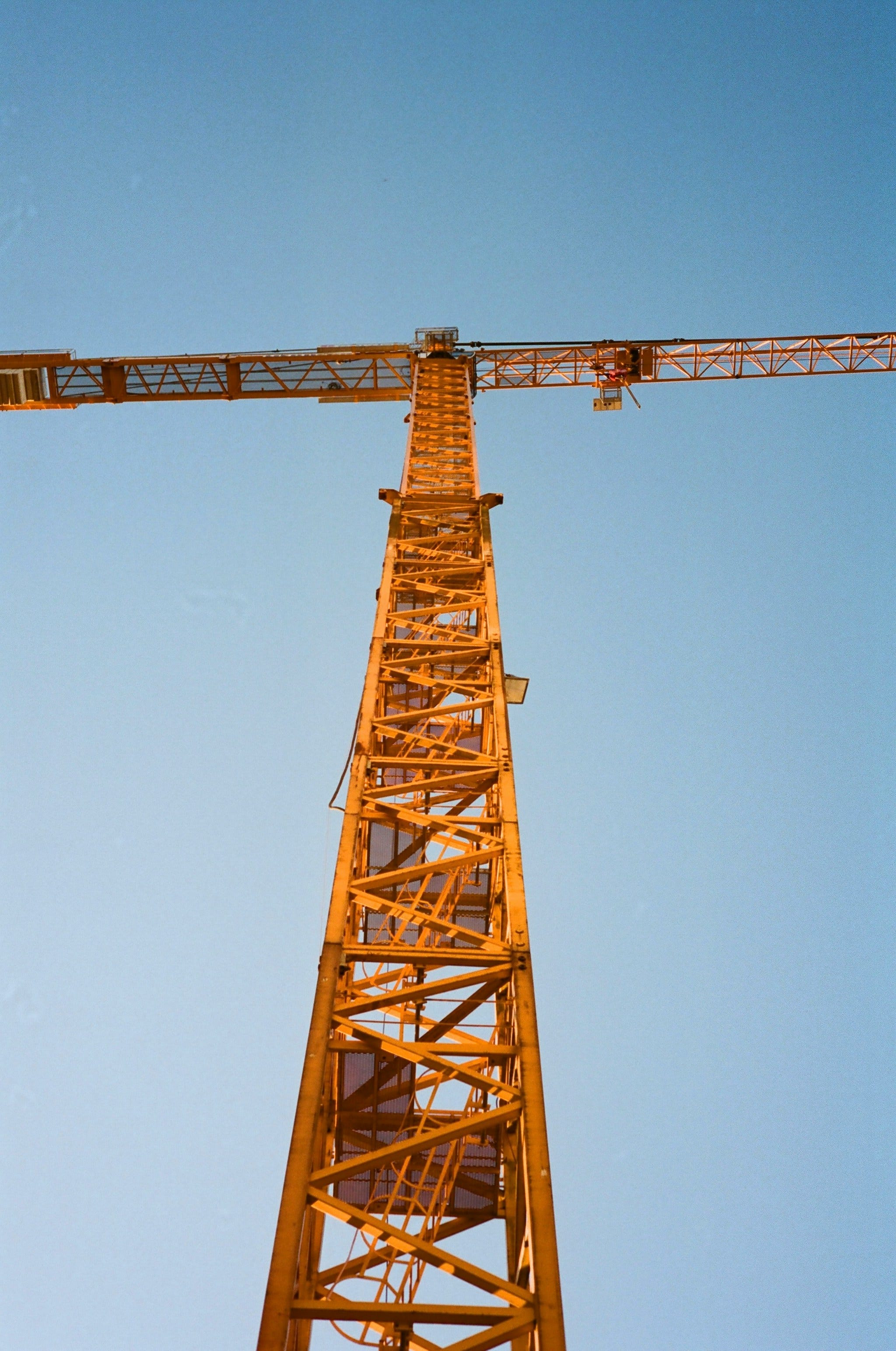
That’s why I love the cranes. They’re a visible reminder of the constant work it takes to maintain the very walls around you.
Three non-exclusive categories of bad thinking
1. Many common strains of anti-capitalist thought rely on pointing out the problems capitalism fails to solve, privileged-ly blind to the problems it silently fixes.
When I was poor in my early twenties I told someone, “Man, being poor makes me really grateful for Walmart.” They looked at me like I had just eaten a tire. “Walmart is terrible for poor people! They abuse their workers!” Of course, I agree that it’s bad for Walmart to abuse their workers. Walmart-with-reforms would be better than Walmart-now. But Walmart-now is much, much better for poor people than no Walmart at all. Walmart’s excellence at logistics means that a poor person can buy their child a waterproof winter coat for twenty-five bucks. Walmart sold me sturdy shoes for twenty dollars when I was poor, and they lasted four years!
Walmart is a star player. You can’t replace Michael Phelps with some other random guy, and you also probably shouldn’t tinker with his workout routine unless you really know what you’re doing, or you risk messing up the special sauce. Achieving the same benefits Walmart currently provides to poor people would require another feat of excellence - one we can strive for, but one that does not come easily.
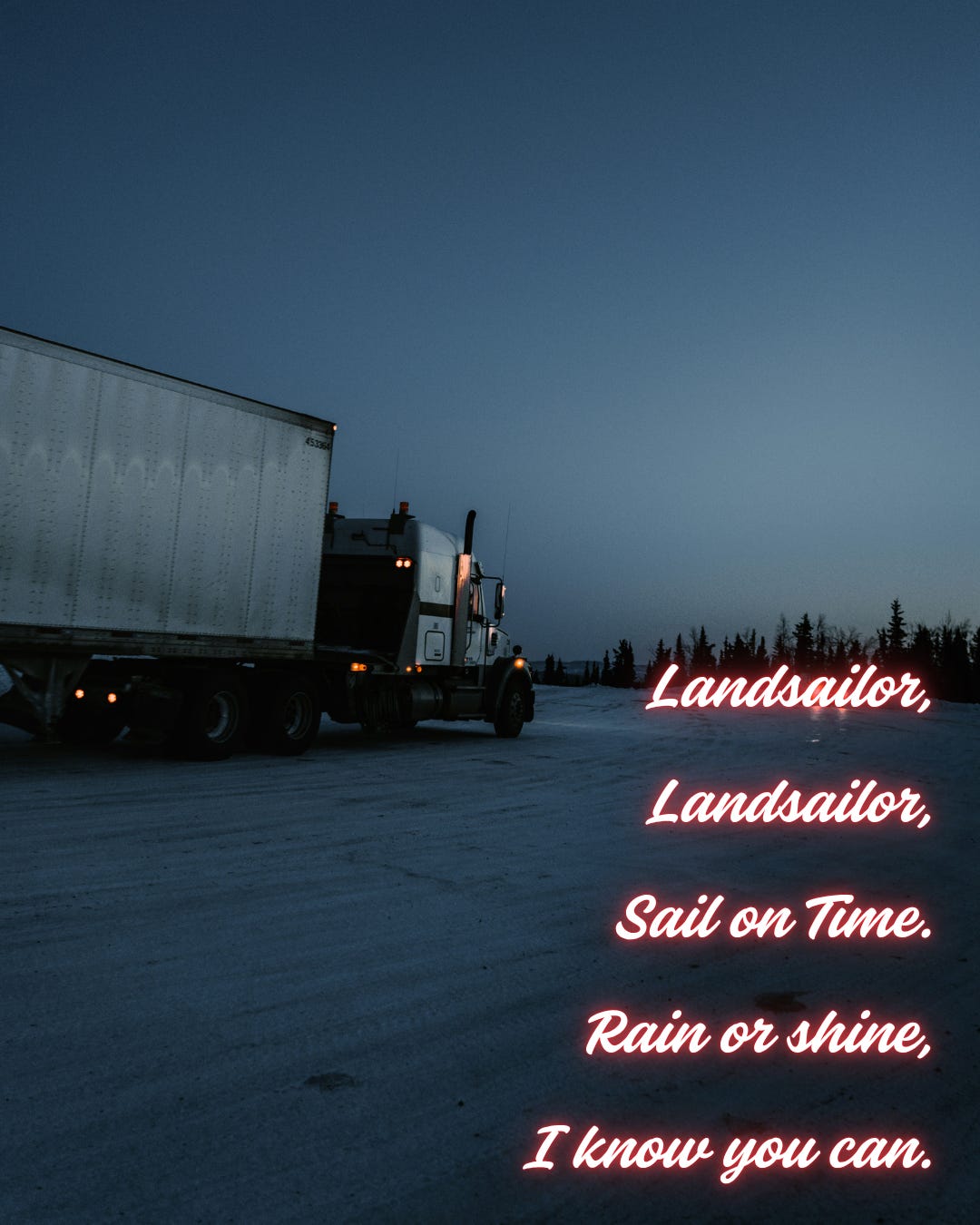
When I listen to Landsailor, a beautiful ode to modern supply chains and the semi-trucks that instantiate them, sometimes I think about great researchers. But more often I think about poor moms. The mom who can get an affordable rotisserie chicken and a bagged salad and fortified cereal, feeding her kids’ developing brains even when she has no time or energy to cook. The mom who can stock the cupboard with bandaids and winter clothes. The mom who can run out to grab medicine for her sick child, diaper ointment for her crying baby, ibuprofen for her headache, and pre-made canned soup, and find them all exactly where she expects within minutes, so the whole family can get a restful night of sleep and rise again, refreshed, to improve their lives the next day. We can take all this for granted. Pre-industrial mothers could not.
Nature is full of pain, and provides little comfort to poor mothers. But the supply chains of modern capitalism do. The thing you need, on the shelf, where you expect it, when you need it. Giving you the bandwidth to fight for more.
In the song, it’s almost as if the mother is praying. But unlike the gods prehistoric mothers prayed to, modern mothers pray to something that actually listens. Something that is on its way, and will get there on time.
2. Many of the more romantic strains of Gen Z style “communism” hinge on an unawareness of the sheer magnitude of unpleasant labor still required for routine maintenance of our homes and roads and utilities.
…and the enormity of any project which plans to efficiently incentivize people to do all that labor with anything other than money. Having leak-proof homes alone requires an absolutely massive amount of human labor, most of which happens at stages of the supply chain invisible to you. That massive logistics project works because at every stage of the way, the laborers can be seamlessly rewarded with money. In fact that’s what money is - a medium of exchange. It the thing that allows you to reward people quickly and efficiently, with something you know they’ll like, rather than digging around in your closet for something to offer them. We would not be able to live in the comfort and safety we’re accustomed to if we were all digging around in our closets for something to offer the roofers, and they were digging around in their closets for something to offer their suppliers, and their suppliers were digging around in their closets for something to offer the raw materials extractors, etc. A free market is just a way to reward people efficiently, so we can get back to doing the actual work. Having a leak-proof house requires enormously more work than you think. Poor people will not have reliably leak-proof houses in the winter without capitalism and industrialization.
3. Many ideologies with a “back to nature” bent rely on an unawareness of how painful and unpleasant nature really is.
The labor that protects us from nature works so well, we’ve become blind to our privilege.
Few of us have had to participate in pre-industrial hunting expeditions or seen their accompanying fractures and crushing injuries, so we underestimate how much that would suck. Few of us have had to get those broken bones reset without opioids, so we underestimate how much that would suck.
Early North American people did not underestimate this, which is perhaps best-evidenced by the Blackfoot name for a favored hunting spot: Head-Smashed-In Buffalo Jump. Spoiler alert: the head which got smashed was not that of a buffalo.
This hunting spot was used for about 5,500 years. Lewis (a la Lewis and Clark) described the hunting methods used there as follows:
if they [the hunters] are not very fleet runers the buffaloe tread them under foot and crush them to death, and sometimes drive them over the precepice also, where they perish in common with the buffaloe.
Few of us have had to wear homemade shoes or deal with blisters absent disposable bandaids, so we underestimate how much that would suck. Maybe you’ve been camping, so you feel like you have some idea of what a “natural” lifestyle is like, but few of us have been camping without nylon and mass-produced cookware, so we underestimate how much that would suck.
Few of us have had to do battle with animals and bugs the natural way. From the dawn of our species, humans have been locked in such a violent battle with parasites that it’s not only visible in the physical remains of our ancestors, but in our genome. Sickle cell trait evolved to provide protection against malaria. Imagine getting so relentlessly bitten by disease-carrying bugs that evolution decides it’s better for lots of your friends - and maybe you - to die young from a painful blood disorder. Hey, as long as it protects you from the bugs!
We imagine that living in a lush forest feels like Tinkerbell, when in reality the forest feels more like a constant struggle between you and all the other creatures fighting for whatever square footage you stand on. You do not want to live “naturally” in a place teaming with life. You also do not want to live “naturally” in a place barren of life - if it’s barren, that means there’s no food. In the state of nature, you will always be doing one of two things: fighting other creatures for resources, or starving.
Sometimes I sadly think of Shanidar 1, who survived two broken legs and a broken arm long before any effective pain medications were invented, Shanidars 2 and 5, who were crushed to death by rocks falling from their cave ceiling, and all the ancient humans and human-relatives whose remains are found with signs of arthritis and poorly-healed blunt force trauma and intestinal worms and myriad other conditions which would have caused near-constant sickness or pain.
I think they would have loved my house and my medicine cabinet.
It is dangerously easy to underestimate how painful things can be when you’ve never experienced them. This underpins much of “degrowth” ideology, vaccine skepticism, and the gutting of public health departments. If enough people underestimate how much things can suck, we risk getting dragged back to the bad old days.
The only way is forward.
A Beacon of Progress
In Mussoorie India, I saw a woman who was apparently living in a house made of sticks. Not logs, sticks. It was full of crevices and clearly required frequent maintenance. This is something close to the “default state” of humanity.
Frequently when I discuss the miracle of industrialization and juxtapose it with the “default state” this woman was living under, people object that it’s actually fine, because she was probably “used to it” and therefore happy.
First and foremost, as someone who has lived under a few adverse circumstances, the argument “they’re happy, so it’s fine” has always struck me as unbelievably naive and borderline offensive. Human beings are incredibly resilient and can find ways to extract happiness from some of the most inhospitable situations imaginable. I’m proud of my ability to extract happiness from terrible circumstances. That doesn’t mean it’s okay to just leave me in those terrible circumstances!
More importantly, when I saw that poor woman in Mussoorie living in a house made of sticks, I didn’t think “It’s fine because she’s used to it.” I thought “I wonder what she would make or enjoy if she didn’t have to spend hours of her time and brainpower shoring up the walls of her house. What thoughts would she share with us? What opportunities would she pursue?”
Or maybe she’d just spend the extra time enjoying a nicer dinner with her loved ones.
That’s what being a human is about. Enjoying things, and making things. I don’t care if she’s “used to it,” because she’s a human being, not a dog! The point of being a human is not to “get used to” things. It’s to enjoy and make things.
If I gave you a device that absolved you of ever needing to put away laundry again, I think you would love that. Why? Because now you get to spend more time on the things you like better. Maybe you like those other things better fundamentally, or maybe instrumentally. It doesn’t matter. Either way, you’re a human being with preferences, and your preference is not to spend time putting away laundry. Fulfilling that preference is a worthy goal.
In fact, my robot vacuum is one of the best purchases I ever made.
I quickly lose patience for the romantic notion that the woman in Mussoorie is much different from you or me in this regard. I think she would like it better if she didn’t have to spend time fixing her house. And as a result, I think it would BE better if she didn’t have to spend time fixing her house. And I think most of the arguments to the contrary are racist, and hinge on thinking of poor foreigners more like animals than human beings.
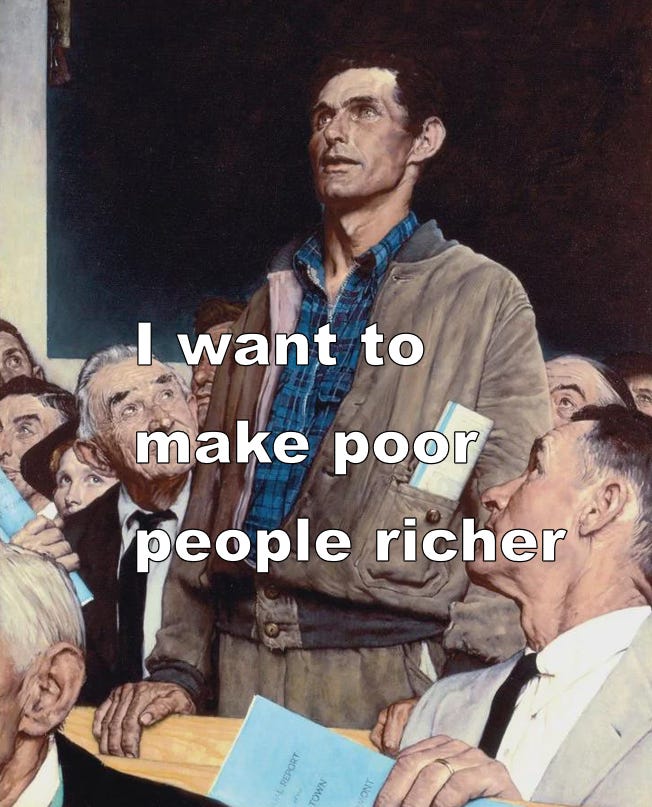
I don’t want to be constantly repairing my walls. Thankfully invisible labor has prevented this for me. I don’t want to get sick all the time. Thankfully invisible labor has prevented this for me. And on and on.
I think it’s better to be rich. I think it’s better to have nice things. And I want everybody to be richer and have nicer things, so I thank my lucky stars for the miracle of industrialization. For the big machines that build us more safe houses, grow us more fresh food, and lift me and my brothers and sisters in humanity to greater heights.
Both literally and figuratively, if you’re reading this, the walls aren’t falling down around you. And both literally and figuratively, the cranes on your city’s skyline document the constant labor required to keep them up. The crane on the skyline is a visible reminder of the constant labor that allows you to be reading this post right now rather than patching up walls.
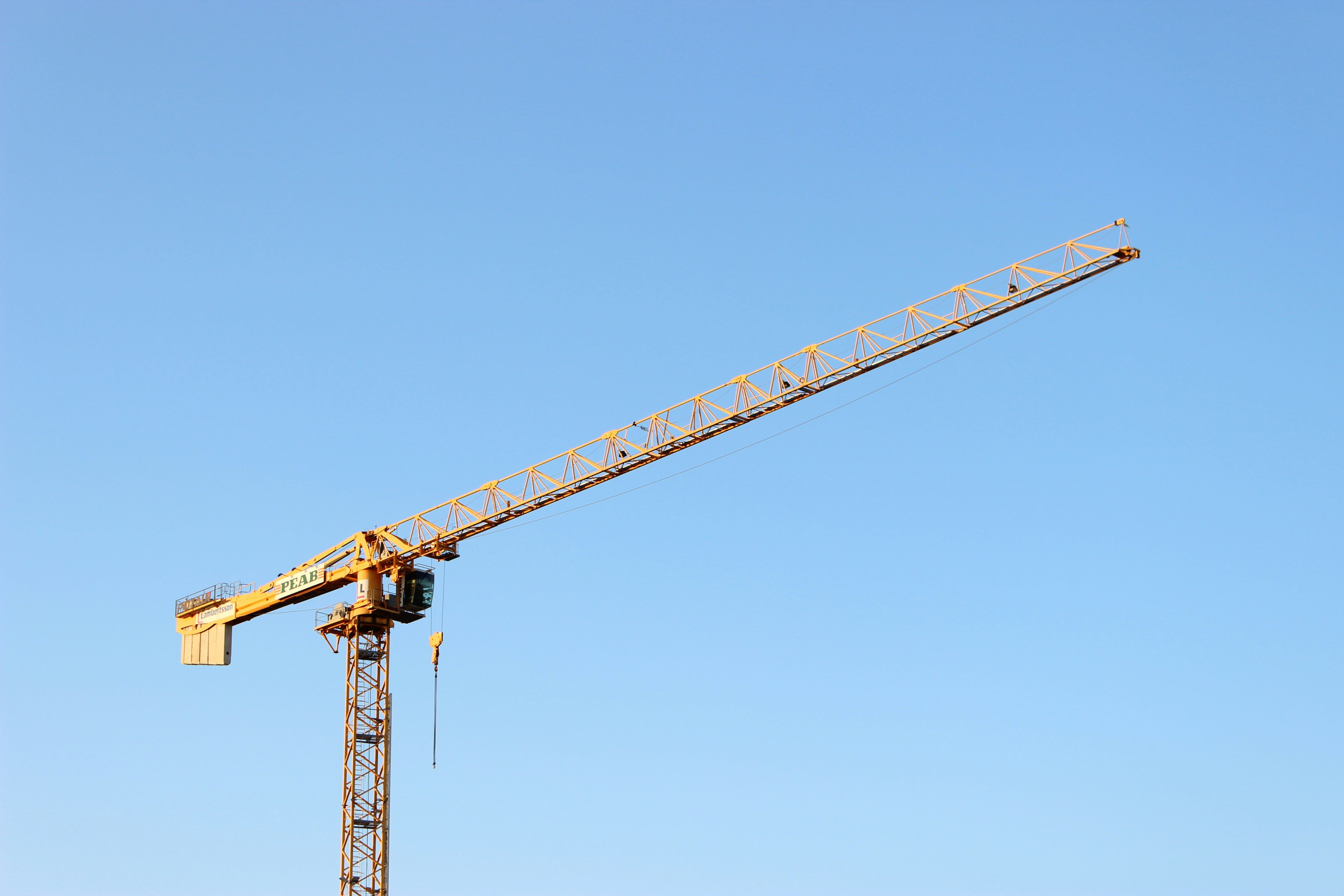
And they’re always there, somewhere. They move around, but you’ll always be able to find a crane in your city, because the project of progress is never complete. If you’re not building, you’re crumbling.
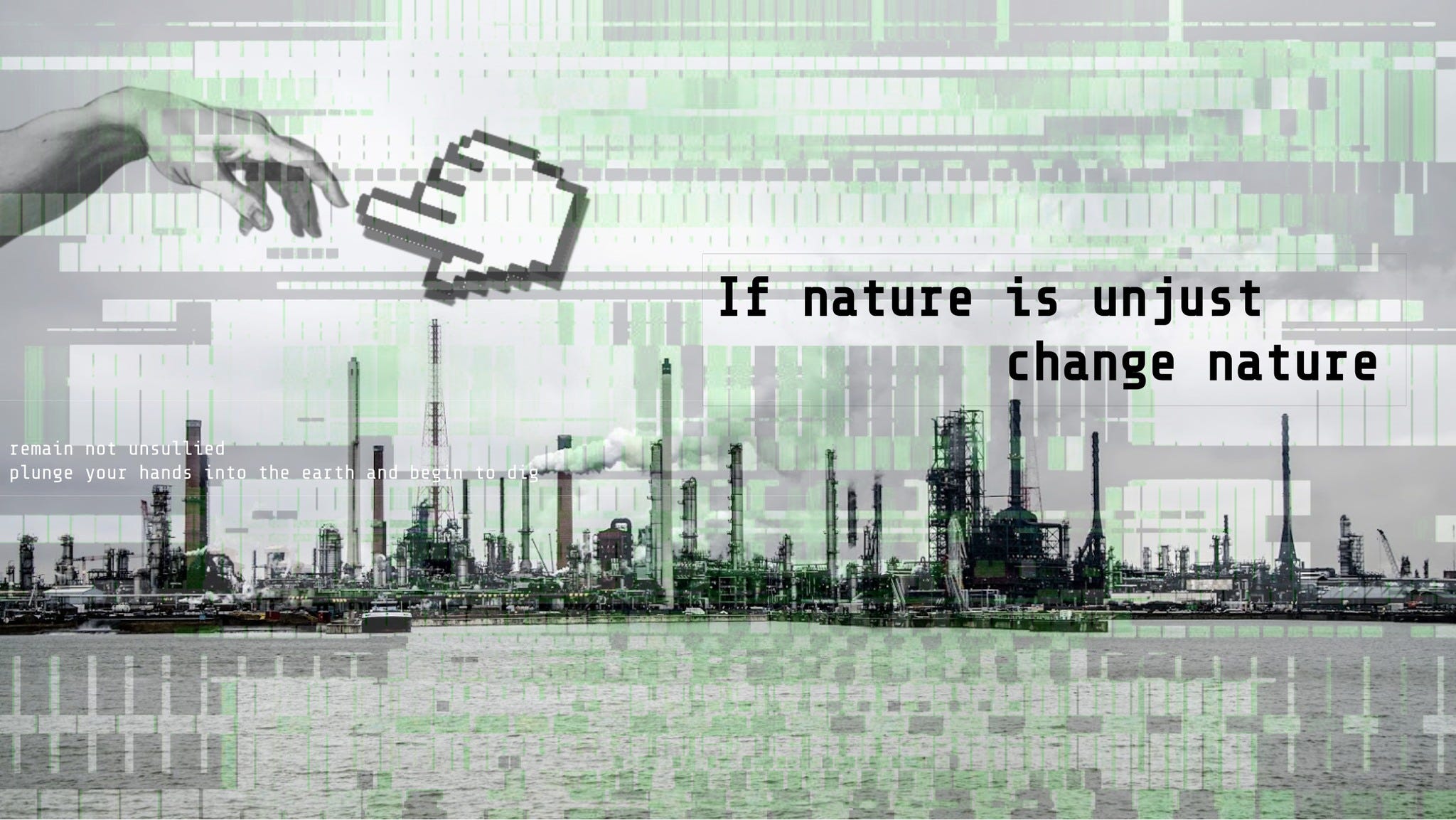
I’ve always been moved by big machines - excavators, tanks, industrial agricultural equipment. A big machine viscerally conjures up the glory and honor of being human. We weren’t the strongest creatures, but we were the smartest, so we built creatures a thousand times stronger than any species ever seen before. We wanted to reach higher and dig deeper and last longer than the oppressor we call nature said we should, so we built machines.
And out of all the machines, the crane is the purest beacon of progress. The crane is the philosophically righteous freedom fighter. He is violent when needed, dragging us out of the swamps with his fingernails, defending us against the creep of entropy. He is the protector, unfathomably strong, covering the weakest among us with shelter. He literally lifts our cities into the sky. And he won’t be taken for granted. He is part of the scene, undeniable, etched into the skyline. His labor is part of the scene. He makes sure we see it.

i. I was planning to get a huge tattoo of a tower crane up my left arm and across my chest, but then I got some evidence tattoos cause cancer. This knowledge is the product of hundreds of hours of labor by skilled scientists, and it’s provided to me for free. I’m now waiting for skilled scientists to do the labor of testing different tattoo inks that might be safer, and I expect that in the next decade or so they will provide that information to me for free as well. I can just expect that service! Like a prince!
As touched upon in one of my favorite pieces of all time, “Someone has to get hurt, occasionally,” the labor that makes us safe comes in multiple forms. I’m referring not only to traditional compensated labor, but also to the often-unpaid labor of progressive reformers, both of which spur us upwards and onwards.